
When a Cover-Up Needs a Clean Slate
If you’ve ever stared at an old tattoo and wondered whether it can truly be hidden, you’re not alone. Choosing the right approach can make all the difference between a cover-up that feels forced and one that looks intentional, balanced, and beautiful. That’s why Tattoo Fading for a Cover-Up: When Is Laser Removal the Better Option? is such an important question for anyone considering a fresh start.
At Ocean Ink , we understand that every tattoo has a story, but not every story needs to stay in its original form. This guide explores when laser tattoo fading can provide your tattoo artist with the best possible canvas for a cover-up, and when a direct cover-up may still be the better option. If you’re considering your next step, Ocean Ink’s Sutherland Shire Laser Tattoo Removal page provides more information about the process, helping you understand your options and prepare for the best possible result.
In simple terms, tattoo fading means reducing the visibility of an old design so a new one can sit over it more effectively. That can be particularly useful if your current tattoo is dark, crowded, or too bold for the style you want next. With Ocean Ink’s experience in both custom tattooing and laser removal, we can help you understand how fading may open up more design options, improve placement, and reduce the risk of the old tattoo showing through.
In this post, we’ll cover how to tell whether your tattoo is a better candidate for fading or an immediate cover-up, what laser removal can achieve, and why the right advice at the right time can help you avoid disappointment later. If you’re considering a cover-up and want to understand your options, contact us to discuss your tattoo and find out how we can help you move forward with confidence.
Tattoo Fading for a Cover-Up: When Should You Consider Laser Removal?
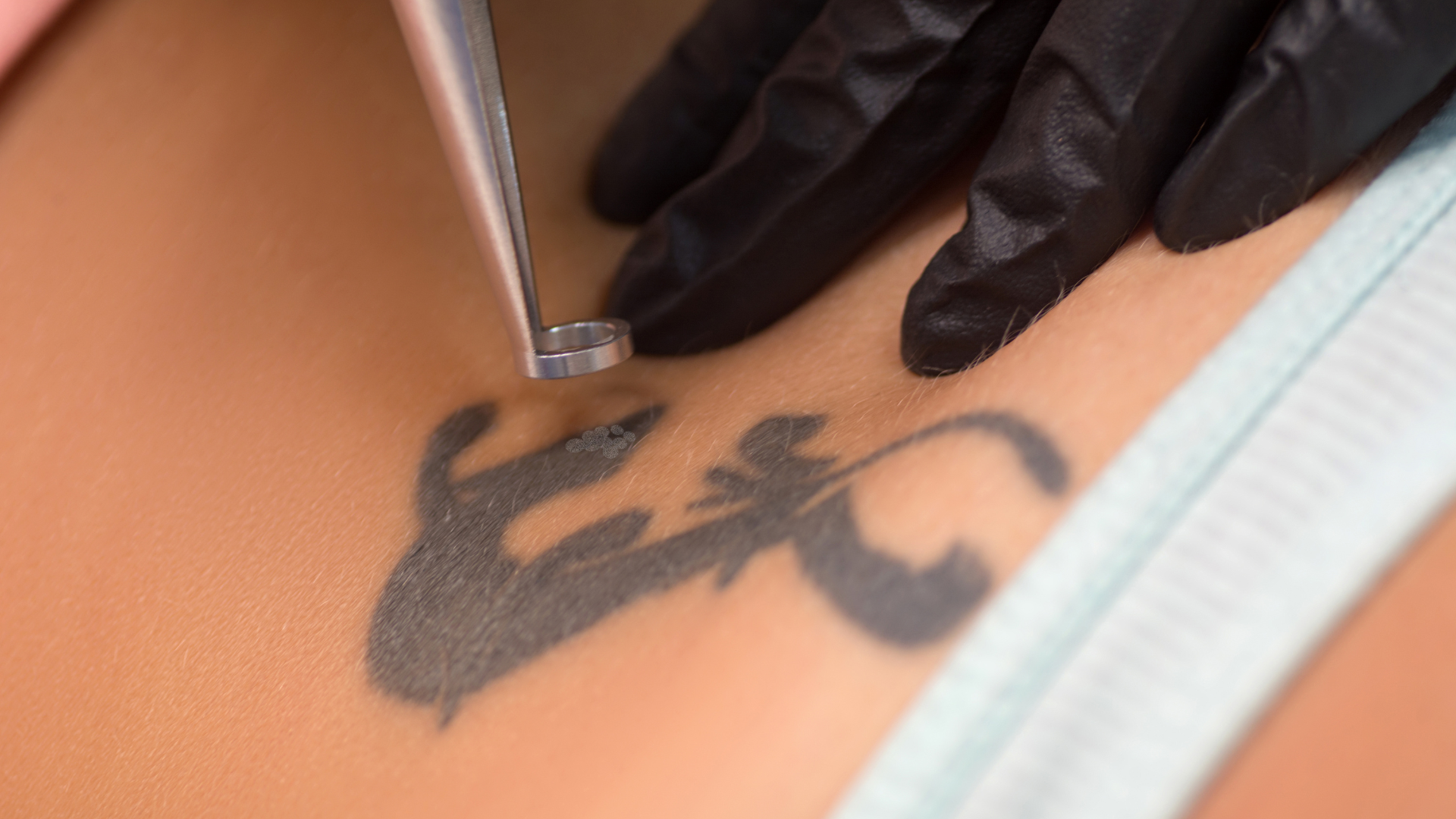
Tattoo Fading for a Cover-Up is the process of lightening an existing tattoo so it becomes a better base for a new design. Rather than removing every trace of the old ink, the aim is to reduce its intensity, sharpen its edges, and make it easier for a tattoo artist to work over it. This approach can also support Minimal-Scarring Tattoo Removal, where careful treatment and appropriate aftercare help protect the skin while gradually fading the existing ink. Think of it like repainting a wall: if the old colour is too dark or uneven, a fresh coat looks far better once the surface has been prepared first.
For many people, fading is the smarter choice when the current tattoo is too bold, too dark, or too large for a clean cover-up. Laser treatment can break down the ink gradually, helping to soften stubborn areas and open up more design possibilities. This is especially useful if you want a lighter, more detailed, or smaller cover-up that would otherwise be limited by the old tattoo underneath. At Ocean Ink, we often see how a little preparation can make a huge difference to the final result.
The main distinction is that tattoo fading is not the same as full removal. You are not necessarily trying to erase the tattoo completely; you are creating breathing room for a new piece to sit beautifully on top. That is why laser removal can be the better option when the original tattoo has heavy black ink, dense shading, or a design that would show through a cover-up. We use the Pastelle Q-Switched Laser for precise fading with fewer sessions and reduced discomfort.
In practical terms, this approach gives you and your artist more creative freedom. Instead of forcing a cover-up to work around a difficult old tattoo, you can start with a cleaner canvas and achieve a result that feels intentional, balanced, and personal. If you are unsure whether fading or full removal is right for you, our team can guide you through the options and help you choose the path that best suits your skin, your tattoo, and your vision for what comes next.
Terms to know for Tattoo Fading for a Cover-Up: When Laser Removal Makes the Difference
Tattoo fading
Tattoo fading is the process of lightening an existing tattoo so it becomes less visible. This is often done with laser treatment to make room for a new design that can better disguise the old one.
Cover-up tattoo
A cover-up tattoo is a new tattoo designed to conceal an older one. It usually relies on darker shading, stronger lines, or a larger composition to blend the previous artwork into the new piece.
Laser tattoo removal
Laser tattoo removal uses targeted light energy to break ink particles into smaller fragments, which the body then clears away over time. It is commonly used to remove a tattoo completely or to fade it enough for a more successful cover-up.
Ink density
Ink density refers to how much pigment sits in the skin and how concentrated the tattoo appears. Heavily packed tattoos are harder to hide, so understanding density helps determine whether fading first will improve your cover-up options.
Colour saturation
Colour saturation describes how bold, rich, and vibrant the tattoo colours are. Bright or deeply saturated inks can be more difficult to cover, which is why laser fading is often considered before planning a new design.
Layering
Layering is the technique of building a new tattoo over an older one using shapes, shading, and linework that work with the existing image. It matters because the success of a cover-up depends on how well the new layers can disguise what is already there.
Pastelle Q-Switched Laser
The Pastelle Q-Switched Laser is a precise laser system used to target tattoo pigment with minimal side effects and reduced discomfort. At Ocean Ink, we use it because it can help fade tattoos efficiently, making it a strong option when you want a cleaner canvas for a cover-up.
FAQs About Tattoo Fading for a Better Cover-Up
-
Laser fading is usually the better choice when your current tattoo is too dark, too large, or too detailed for a cover-up to work well on its own. If the original tattoo has heavy black ink, strong outlines, or limited skin space around it, lightening it first gives your artist far more room to create something new. In many cases, a few sessions of Tattoo Fading for a Cover-Up: When Is Laser Removal the Better Option? can make the difference between a compromised design and a cover-up you’ll actually love.
-
Not always. Some older or naturally faded tattoos can be covered successfully straight away, especially if the new design is larger and uses darker tones or bold linework.
However, if the original tattoo still has strong contrast or awkward placement, a direct cover-up may leave the old design visible underneath. We’ll always assess your tattoo honestly and let you know whether fading first would improve the final result.
-
That depends on the tattoo, the style of the new design, and how much of the old ink needs to be hidden. In some cases, a small amount of fading is enough to open up more cover-up options; in others, several sessions may be needed to soften dense areas or break up dark patches. We can guide you on the level of fading likely needed so your cover-up artist has the best possible canvas to work with.
-
Yes, for many people it does. Because the goal is to lighten the tattoo rather than remove every trace of it, fewer sessions are often needed, which can mean less discomfort overall.
At Ocean Ink, we use the Pastelle Q-Switched Laser, known for precise results, fewer sessions, and reduced side effects, including a significant reduction in pain.
-
You’ll usually need to allow enough time for your skin to heal properly between laser sessions, and then again before getting the new tattoo.
This helps reduce irritation and gives the skin the best chance to recover fully before any cover-up work begins. We’ll talk you through a realistic timeline based on your skin, your tattoo, and the result you’re aiming for.
-
Very dark tattoos, solid blocks of ink, thick tribal-style designs, and tattoos with sharp black outlines are often the hardest to conceal.
Bright colours can also be challenging if the new design is lighter or more delicate. In these situations, fading first can help avoid a cover-up that looks crowded, muddy, or overly large.
-
Absolutely. We’ll look at your existing tattoo, discuss the style you want next, and give you honest advice about whether a cover-up alone will work or whether laser fading would produce a better outcome.
Since 2006, we’ve helped clients across the Sutherland Shire find the right path for their skin and their vision, and we’re here to make sure you feel confident before moving ahead.
Choosing between a direct cover-up and laser fading first comes down to what will give you the best long-term result. If you’re unsure, we’re always happy to assess your tattoo and help you plan the next step with confidence.
Choosing the Right Path for Your Cover-Up
When it comes to Tattoo Fading for a Cover-Up: When Is Laser Removal the Better Option?, the right choice often comes down to the tattoo you already have, the design you want next, and how much of the old ink needs to be softened first. Some tattoos can be covered successfully with a skilled redesign alone, while others need a little help from laser fading to create a cleaner canvas. Understanding that difference can save you time, disappointment, and unnecessary compromise.
At Ocean Ink , we know that every cover-up starts with a careful assessment. Our team looks at the size, colour, placement, and saturation of your existing tattoo, then helps you decide whether a cover-up, partial fading, or full removal is the smartest option. Using the Pastelle Q-Switched Laser, we can fade tattoos with precision, fewer sessions, and minimal discomfort, making the process far more manageable for clients who want a fresh result.
This is why it’s important to understand your options before starting tattoo removal. Whether you’re looking to fade a tattoo for a cover-up, remove a design completely, or simply explore what’s possible, having the right information can help you make a more confident decision based on your goals, comfort and desired results. To learn more about the process and what to expect, visit Ocean Ink’s Sutherland Shire Laser Tattoo Removal page.
If you’re unsure which route is best, we’re here to help you make an informed decision. Reach out to us through our contact page and let’s talk about the possibilities for your next piece. With the right guidance, your old tattoo can become the foundation for something truly exceptional.