
Can Older Tattoos Really Be Easier to Remove?
If you’ve been living with a tattoo for years, you may have noticed it fading, softening, or losing the sharpness it once had. That natural ageing process often leads people to wonder whether Laser Removal for Old Tattoos: Can Older Ink Be Removed More Easily? is actually true, and, more importantly, what that means for your own removal journey. The answer is not always straightforward, but age can play a significant role in how tattoo ink responds to laser treatment.
At Ocean Ink, we understand that every tattoo tells a story, and sometimes that story changes over time. If you’re considering removal, it helps to know how older ink differs from newer work, why some tattoos break down more readily, and what factors can affect the number of sessions needed. This is especially relevant if you’re exploring Sutherland Shire and want clear, practical guidance before starting treatment.
In this article, we’ll explore whether older tattoos are genuinely easier to remove, what can influence laser treatment results, and how factors such as ink colour, depth, skin type and tattoo placement can affect the outcome. We’ll also look at why the right laser technology matters, including the precision and comfort benefits of the Pastelle Q-Switched Laser used at Ocean Ink. If you’re considering treatment and want to learn more about the process, visit our Sutherland Shire Laser Tattoo Removal page for more information.
Whether you’re hoping to remove a faded design completely or prepare for a cover-up, understanding Laser Removal for Old Tattoos: Can Older Ink Be Removed More Easily? can help you make informed decisions and set realistic expectations. If you’d like personalised advice or want to talk through your options, contact Ocean Ink and we’ll be happy to help.
Laser Removal for Old Tattoos: Understanding How Older Ink Fades
Laser Removal for Old Tattoos is the process of using targeted laser energy to break down tattoo pigment that has already been in the skin for years. In simple terms, the laser shatters the ink into tiny particles, and your body’s natural immune system gradually clears them away. Older tattoos can sometimes respond well because the ink has often already faded and spread slightly over time, making it easier for the laser to target and lift the pigment. Think of it like removing a well-worn stain rather than a fresh spill, it may still take time, but the job can be more straightforward in some cases.
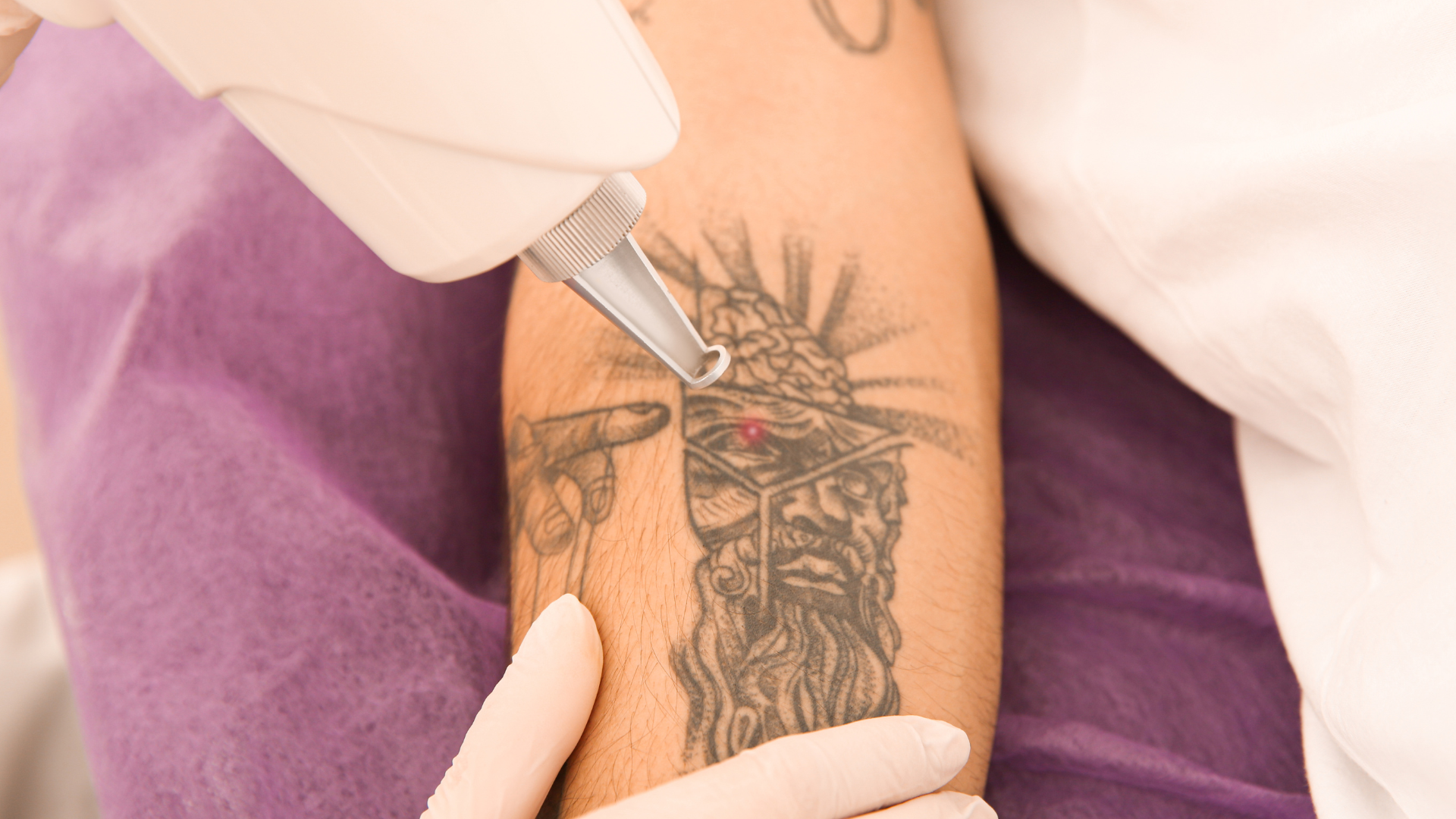
That said, age alone does not guarantee easier removal. The outcome depends on several factors, including the ink colours used, how deeply the tattoo was placed, your skin type, and whether the design has been exposed to sun over the years. Black ink is usually the most responsive, while brighter colours can be more stubborn. If you’re wondering, Can You Remove Part of a Tattoo Before Getting a New Design, partial laser removal can be an option when you only need to fade certain areas of an existing tattoo before a cover-up or redesign. At Ocean Ink, we use the Pastelle Q-Switched Laser, which is designed for precise treatment and can help support gradual fading with less discomfort.
Even if the ink is faded, laser removal still works gradually, and most tattoos need a tailored treatment plan. The good news is that older tattoos may sometimes require fewer sessions than newer, denser pieces, especially if the pigment has naturally broken down over time. It’s a bit like sanding back an old painted surface: the longer it’s been there, the more the finish may have already softened, but careful work is still needed to get the best result.
For you, the value of Laser Removal for Old Tattoos is that it opens up realistic options for change, whether you want complete removal or a clean slate for a cover-up. At Ocean Ink, we approach every tattoo with the same care and attention we bring to creating custom body art, helping you understand what to expect and guiding you towards the right treatment path. If you’re considering removal, we’re here to make the process clear, comfortable, and tailored to your skin and your goals.
Terms to Know Before Laser Removal for Old Tattoos
Tattoo Fading
Tattoo fading is the natural lightening of ink over time as the skin renews itself and the pigment gradually breaks down. Older tattoos often appear softer or less saturated, especially if they have been exposed to the sun or have already begun to blur at the edges.
Pigment Depth
Pigment depth refers to how deeply the tattoo ink sits within the skin. Ink placed closer to the surface is usually easier for laser treatment to target, while deeper pigment can take more sessions to break down.
Laser Wavelength
A laser wavelength is the specific light energy used to target certain ink colours and particle sizes. Different wavelengths are better suited to different pigments, which is why the right laser settings matter so much for effective tattoo removal.
Q-Switched Laser
A Q-switched laser delivers very short, high-energy pulses that shatter tattoo ink into tiny particles. These particles are then cleared away by the body’s natural processes over time.
Ink Fragmentation
Ink fragmentation is the process of breaking tattoo pigment into smaller pieces so the body can remove it more easily. This is the core action behind most laser tattoo removal treatments.
Treatment Session
A treatment session is one appointment in the tattoo removal process, where the laser is applied to the tattooed area. Most tattoos need more than one session, and the number depends on factors such as age, colour, depth and skin type.
Cover-Up Tattoo
A cover-up tattoo is a new design created over an existing tattoo to conceal or transform it. It can be a great option if you want to refresh an old tattoo rather than remove it completely, especially when the original ink is already faded.
Understanding these terms gives you a clearer picture of how Laser Removal for Old Tattoos: Can Older Ink Be Removed More Easily? really works. At Ocean Ink, we’re here to help you make informed choices, whether you’re planning full removal or exploring a cover-up that gives your old tattoo a new life.
FAQs About Laser Removal for Old Tattoos
-
In many cases, yes. Older tattoos often fade naturally over time, which can make the ink less dense and easier for the laser to break down.
That said, results still depend on factors like ink colour, depth, skin type, and how the tattoo was originally applied.
-
As tattoos age, the pigment can become less concentrated and the body may have already started breaking down some of the ink on its own. This can mean fewer sessions are needed compared with a very fresh, heavily saturated tattoo.
For example, a sun-faded black tattoo on the forearm may respond more quickly than a bold, recently done design with thick lines.
-
Absolutely. Black and dark blue inks are generally easier to target than lighter or more complex colours such as green, yellow, or white. Even if the tattoo is old, certain pigments can still be stubborn, which is why a professional assessment is so important before treatment begins.
-
There’s no one-size-fits-all answer, because every tattoo is different. Older tattoos may need fewer sessions than newer ones, but the total number still depends on size, colour, location, and how your skin responds to the laser tattoo removal process. At Ocean Ink, we asses
-
It can be, but not always. Pain is influenced more by the treatment area, your individual pain tolerance, and the laser settings than by the age of the tattoo alone.
The good news is that Ocean Ink uses the Pastelle Q-Switched Laser, which is designed for precision and is known for reducing discomfort while delivering strong results.
-
Many tattoos can be faded significantly, and some can be removed very close to fully, but complete removal is never guaranteed. Older tattoos often have a better chance of fading well because the pigment has already started to weaken, yet stubborn colours or deeply placed ink may leave a faint shadow. We’ll always be honest with you about what’s achievable before you begin.
-
That depends on your goal. If you want to clear the area completely or lighten the tattoo first, laser removal is often the best option; if you’d rather transform the design into something new, a cover-up may be the better fit. In some cases, we recommend laser fading first so your artist has a cleaner canvas for a stronger cover-up result.
We hope these FAQs have made Laser Removal for Old Tattoos: Can Older Ink Be Removed More Easily? feel a little clearer. If you’d like tailored advice, our team at Ocean Ink is here to help you understand your options and choose the best path for your tattoo
Final Thoughts on Removing Older Ink
Ultimately, Laser Removal for Old Tattoos: Can Older Ink Be Removed More Easily? comes down to a mix of ink age, colour, depth, skin type, and the quality of the original tattoo. Older tattoos can often respond well to laser treatment because the ink has already started to break down over time, but every tattoo is different. That’s why understanding the process matters before you commit to treatment or choose between removal and a cover-up.
If you’re weighing up your options, this information can help you make a more confident decision. Whether your goal is complete removal or preparing a faded design for a new piece, knowing what affects results gives you a clearer picture of what to expect. For many people, it’s also a practical step towards a fresh start, especially when the tattoo no longer reflects who they are today. To see how this fits into the wider service, explore our Sutherland Shire Laser Tattoo Removal page.
At Ocean Ink, we combine experience, precision, and the advanced Pastelle Q-Switched Laser to help make the process as effective and comfortable as possible. If you’d like tailored advice about your tattoo, or you’re ready to take the next step, contact us today and we’ll help you work out the best path forward.